The Quiet Return: What Becomes Possible When You Stop Bracing for the Worst
I want to tell you about a different kind of morning.
Not a perfect morning. Not a morning from a wellness influencer's Instagram feed, with the golden light and the untouched latte and the journal open to a fresh page.
An ordinary morning. The kind that used to feel impossible.
I wake up and I am not immediately cataloguing what could go wrong. I am not running the background calculation of whether I am enough, whether the work is enough, whether the clients will come. I wake up and I am simply here. In my body. In my life.
For the woman I used to be — the one managing the migraines and the insomnia and the six-figure career that looked like success from the outside while something essential hollowed out underneath — that kind of morning would have been unimaginable. Not because I didn't want it. Because my nervous system didn't know how to hold it.
This is what becomes possible when you stop running survival responses. Not a perfect life. A present one.
Nobody tells you what the return looks like. We have plenty of language for the falling apart. But the return — the slow, nonlinear, unglamorous process of coming back to yourself after survival mode has had its way with you — that one gets far less airtime.
It looks more ordinary than you expect. More like a series of small recognitions than a single blinding revelation. Like finding out you already knew things you didn't know you knew.
What Survival Mode Actually Does
Most of us are so accustomed to survival mode that we have stopped noticing we are in it. It has become the background frequency of daily life — the low, constant hum of anticipating the next problem, managing the next threat, staying one step ahead of whatever might go wrong.
We call it being responsible. Being realistic. Being prepared. And some of it is. But there is a significant, felt, nervous system-level difference between healthy preparedness and chronic survival mode.
Healthy preparedness is a resource you draw on when you need it. It is available, and then it steps back. Chronic survival mode is a posture. A default. A way of moving through the world that keeps some part of you permanently contracted, permanently scanning.
And what it costs — beyond the obvious toll on the nervous system — is access to possibility. It narrows the aperture of the self. The things you are available to — beauty, creativity, genuine connection, the full range of your own emotional experience — get filtered through the survival lens. Including, often, the very things that make you most fully yourself.
The Moment the Ground Shifted
I had been doing healing work for a while — building something I believed in, working with people in a way that felt more true to my calling than anything I had done before — when a conversation happened that forced my hand.
I was coaching for a mindset organization while simultaneously building the early stages of my own practice. The founder found out. She called me. I told her the truth — that yes, I was building my own business alongside my work with her. She told me I couldn't do both. That I needed to choose.
I told her that was her decision to make, not mine.
And so I sat with that overnight. In the particular silence of a house where everyone else is asleep and you are alone with the question of what happens next.
Underneath the uncertainty, something in me was steady. Not confident exactly. Not fearless. Just solid. Like a tree in wind. Moving, but rooted. I knew that what I was doing in my practice was making a difference. And no phone call the next morning was going to change what I knew in my body to be true.
She let me go the next day. And that's when the rubber met the road.
The Classroom Where Everything Clarified
I enrolled in my first HBLU certification course. I walked into that classroom and looked around. Every other person in the room was a licensed therapist or a medical professional. They had credentials I didn't have, a shared vocabulary — clinical, precise, institutional — that I did not speak.
And the old question arose right on schedule.
Who do you think you are?
I didn't have an answer. So I did the only thing available to me. I listened.
And as the instructor walked through concepts and frameworks and clinical language I had never formally learned, something began to happen. I kept thinking: I do that. I know what that is. Not because I had been taught it — because I had been living it. The work I had been doing intuitively had already been teaching me, in real time, what the classroom was now giving language to.
The doubt that had walked in with me did not walk out. In its place was something I want to be precise about: not confidence. Not the loud, performance-based confidence of someone proving something. Clarity. A settled, undefended knowing that this was mine.
What the Return Actually Looks Like
The return is not a straight line. It does not proceed neatly from breakdown to healing to arrival. It moves in spirals, with setbacks that feel like going back to zero but are actually happening at a slightly different level than before.
A woman I worked with came to me two years into her recovery from a decade of survival mode. She had done therapy, done a lot of the right things. And she felt, she said, like she was better but not yet herself.
What we found was that she had been healing the wound — the patterns, the nervous system dysregulation — but she had not yet returned to the self that existed underneath the wound. She had stopped herself short of the actual return.
Because the actual return requires something healing work doesn't always address directly: you have to reclaim the things that are specifically, irreducibly yours. Not just the absence of the old patterns. The presence of something new. Your creative life. Your voice. The particular way you move through the world when you are not managing a threat.
The things that come back first are usually small. Almost embarrassingly small. A preference for a particular color you forgot you loved. A way of spending a Saturday morning that feels, mysteriously, like yourself. For me, it was paint — the surprising, intuitive relationship with color and canvas that emerged when I finally had enough stillness to hear what my hands wanted to do. Each one is a thread. And when you follow the thread, you find your way back to the self that was waiting underneath the survival.
What Is Now True
I don't worry about where the clients are going to come from. For years, the question of clients was a source of chronic low-grade dread — not panic, dread, the kind that lives in the belly and colors everything. That dread is gone. Not because I have more certainty about the future. Because survival mode released enough that uncertainty now feels like what it actually is: open space. The condition in which things become possible.
I trust what I hear coming through in sessions. The knowing that was always there has finally been given enough space to be useful. I can describe what I do without stumbling — without the survival response that used to make me reach for language that would be acceptable, that wouldn't sound too strange. Now the words come from a settled place rather than a scrambling one.
And I have created The Richey Method and can share it with others. Taking what lives in you — the intuitive knowing, the hard-won wisdom of your own healing — and giving it a name, a structure, a form that can be taught and passed forward. That is an act of profound self-authorization. You cannot do it from inside survival mode. The Richey Method exists because I stopped asking for permission I was never going to receive from the outside, and started living from the permission I had the authority to give myself all along.
What Is Waiting for You
The open field is not a permanent state of bliss. Life still brings hard things. The nervous system still sometimes defaults to old patterns. The difference is not that those things are gone. The difference is what happens in the body when they arrive — a capacity to feel the contraction, recognize it for what it is, and come back without the secondary storm of self-judgment that used to make every difficult moment last three times longer than it needed to.
That returning — practiced and imperfect and real — is the whole of the work. And it is available to you. Not when everything is resolved. Not when you have done enough healing or finally feel ready. Now. In this ordinary moment. In the body you are already living in.
Whatever was alive in you before survival mode became the default — before the wanting went underground and the creative self went quiet — it is still there. It went patient. It waited.
Because the body does not abandon what it knows is true.
And when you finally create enough safety — enough stillness, enough honest witnessing of what has been closed and why — it begins, slowly and without fanfare, to come back. In the ordinary morning when you wake up and realize you are not in survival mode. In the moment you describe your work without stumbling, claim your framework without apology, stand in the authority of what you know without waiting for someone else to confirm it.
That is what becomes possible.
And it has been waiting for you all along.
___
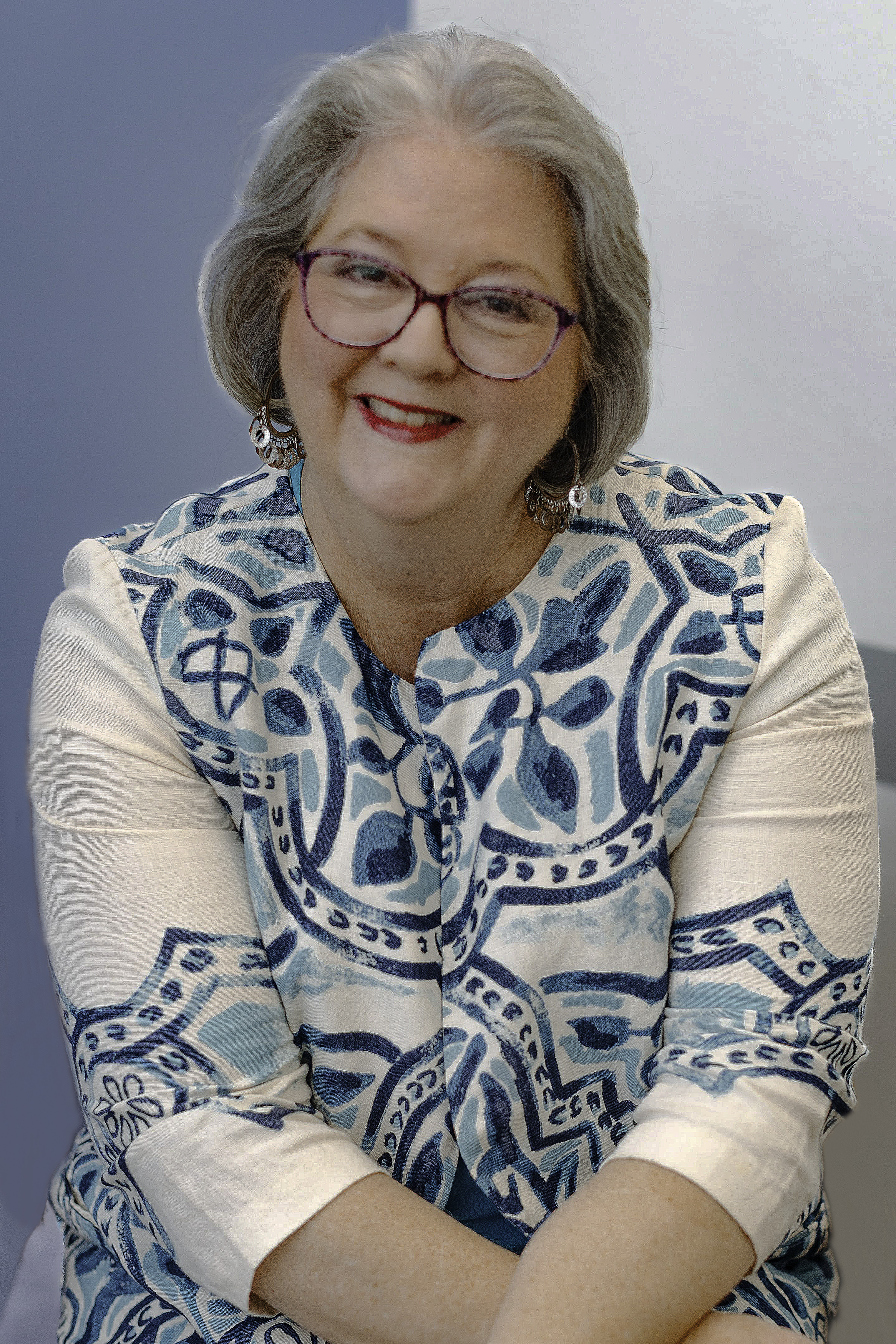
Judith Richey is a Master-Certified HBLU practitioner and creator of The Richey Method™ — a four-stage framework that bridges neuroscience, energy psychology, and spiritual healing. She works with women who are ready to stop managing their lives and start living them. Learn more at JudithRichey.com